Organizing Your Belongings
How to Store and Organize Your Things.
Tips for Organizing and Storing Your Belongings
Organizing your belongings has been a challenge I’ve faced since becoming an adult. Honestly, it feels like a universal struggle. The moment humans stopped being nomads and settled into homes, we started accumulating stuff — and once you accumulate, you have to manage it.
The good news? There are practical, realistic solutions for controlling clutter without overspending.
It’s easy to walk into an organizing store and get swept away by colorful bins, baskets, and matching containers. I’ve done it. But buying storage before you declutter often creates prettier clutter — not real organization.
So don’t start at the store.
Start with what you already own.
Take inventory. Declutter. Make a plan. Then buy only what supports your space and your lifestyle.
With three kids, a cleaning company, and a website to run, I’ve learned that staying organized isn’t optional — it’s survival.
Start Small When Organizing Your Belongings
Trying to organize your entire house in one weekend almost guarantees burnout. Organizing your belongings works best when you pace yourself.
Instead of Tackling Everything at Once
- Pick one room.
- Better yet, start with a small room.
- If the room is large, break it into zones (one closet, one wall, one drawer).
Small wins build momentum. When you see progress, you’re more likely to keep going.
Make a Plan Before Organizing Your Belongings
Grab a notebook and dedicate it strictly to organizing. Planning keeps you focused and prevents distractions.
Sit in the Room and Evaluate it Honestly
Ask yourself:
- What actually belongs in this room?
- What has drifted in from somewhere else?
- What do I use regularly?
- What is just taking up space?
Write down what truly belongs in that space. This clarity helps you make faster decisions once you begin sorting.
Inventory and Categorize Your Belongings
Let’s be honest — letting go is hard. We get used to seeing things. Familiarity feels safe.
But clutter grows when we avoid decisions.
Use the Classic Three Box Method
- Keep
- Donate
- Trash
Start Small — a Single Shelf or Drawer
Pick up each item and ask:
- Do I love it?
- Do I use it?
- Does it serve a real purpose?
If the answer is no, it doesn’t need to stay.
Keep
Items you genuinely use, need, or love.
Donate
Items in good condition that could benefit someone else.
Trash
Broken, expired, or unusable items.
And here’s an important step many people skip:
Remove the Donate and Trash items from your house immediately. Don’t let them linger in the garage “just in case.”
That one action alone prevents re-cluttering.
Clean Before You Put Anything Back
Once you’ve cleared an area, clean it thoroughly before returning anything.
- Dust walls and baseboards.
- Wipe down shelves and surfaces.
- Vacuum or sweep.
- Clean the items you’re keeping.
Dust absolutely collects on walls, shelves, and even stored containers. Cleaning now gives you a fresh foundation.
Tackling What’s Left After Organizing Your Belongings
Now you’re left with what truly matters — usually about one-third of what you started with.
This is when storage solutions make sense.
Ask yourself:
- Do I need shelves?
- Would drawer dividers help?
- Can I use vertical space?
- Can I repurpose containers I already own?
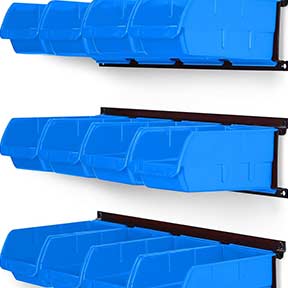
Shelving is one of the most affordable storage upgrades. You can add shelves inside closets, garages, sheds, or utility rooms. Most options at home improvement stores are simple to install.
But remember: storage supports organization — it doesn’t replace decluttering.
Keep Similar Items Together
Group like with like.
- Holiday decorations in labeled bins.
- Kids’ keepsakes in one container per child.
- Tools together.
- Paperwork in one centralized location.
Also separate frequently used items from rarely used ones. Store everyday items at eye level and within reach. Move seasonal or occasional items higher or farther back.
This simple adjustment makes daily life easier.
Smart Storage Container Tips
Before shopping, measure your space. Guessing leads to wasted money.
Consider:
- Closet height
- Under-bed clearance
- Shelf depth
- Drawer dimensions
Check thrift stores and resale shops for baskets and bins. I’ve found excellent storage containers for a fraction of retail price. Just clean them well before use.
Clear containers work well for visibility. Opaque bins look neater. Choose based on the space and purpose.
And label everything. Even if you think you’ll remember — you won’t.
Arrange for Accessibility
When putting everything away:
- Place frequently used items toward the front.
- Store heavier items lower.
- Keep fragile items protected.
- Avoid stacking so high that access becomes frustrating.
If it’s difficult to retrieve, you won’t maintain it.
Maintaining Your Organized Belongings
Organizing your belongings isn’t a one-time event — it’s a habit.
The maintenance rule is simple:
If you take it out, put it back.
Set aside one hour each week to reset a space. A short, consistent reset prevents major clutter from returning.
And once you finish one room, move to the next using the same system. Repetition builds confidence and efficiency.
Organizing your belongings becomes easier each time you do it because you develop decision-making muscles.
You’ve built the foundation. Now keep it going — one space at a time.
Storage Options



Follow Us on Facebook