My Favorite Laundry Products

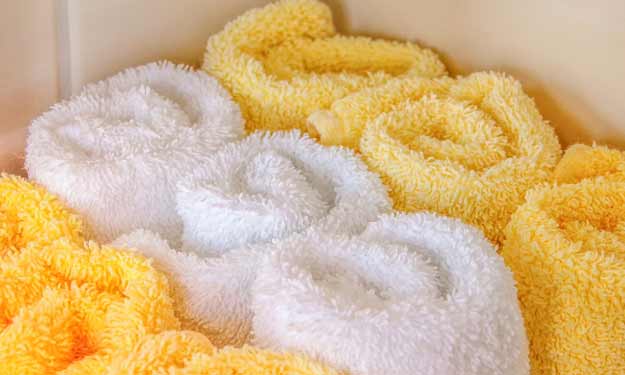
Clean Towels Washed with Our Favorite Laundry Products
Natural, Clean and Earth Friendly Laundry Products.

Is Your Skin Sensitive to Laundry Products?

If you have sensitive skin, your laundry products may be worth looking at. Laundry detergent, fabric softener, scent boosters, dryer sheets, and fragrance can leave ingredients on clothing, towels, sheets, and other fabrics that stay in contact with your skin for hours.

For some people, these products can contribute to itching, redness, irritation, or contact dermatitis. If you notice that your skin becomes irritated after wearing freshly washed clothing or sleeping on freshly laundered bedding, changing your laundry routine may be worth considering.

I learned this firsthand when my daughter went through a period of having extremely sensitive skin. She developed recurring rashes, hives, and other skin reactions, and in the beginning, we weren’t sure what was causing them.

We tried many of the things you would normally consider when trying to identify a skin trigger. We visited a dermatologist, changed skin-care products, looked at the fabrics she was wearing, considered foods, and changed our laundry products.

Her dermatologist prescribed a strong topical corticosteroid for her skin. We followed the medical advice we were given, but I still wanted to understand what might be triggering the reactions in the first place rather than simply treating the symptoms.

We eliminated some synthetic fabrics, tried an elimination diet with medical guidance, changed her laundry products, and switched to more natural skin-care products. Despite all of these changes, her skin continued to break out.

Could Laundry Products Be Irritating Sensitive Skin?

One day, I had to fold my daughter’s laundry and noticed that her towels had a heavy, waxy-feeling residue. When she came home, I asked how much fabric softener she had been using. The answer was quite a lot.

That got me thinking about how much laundry product can remain on fabric after washing, especially when products are overused. Fabric softeners and scented laundry products are designed to leave ingredients behind on fabrics. For someone with sensitive skin, fragrances, preservatives, dyes, or other ingredients may be irritating.

This does not mean fabric softener is automatically responsible for a rash or that every person with sensitive skin will react to laundry products. Skin rashes and hives can have many causes. However, if you have sensitive skin, reducing unnecessary fragrance and laundry-product residue is a reasonable step to try.

What Laundry Products Can Irritate Sensitive Skin?

When you are trying to create a laundry routine for sensitive skin, don’t look only at your laundry detergent. Several products can leave ingredients behind on clothing and linens.

  • Laundry detergent: Fragrances, dyes, preservatives, and other ingredients can bother some people with sensitive skin.
  • Fabric softener: Liquid fabric softeners are specifically designed to coat fibers, which can leave a residue on fabrics.
  • Dryer sheets: These can also leave fragrance and softening ingredients on clothing.
  • Scent boosters: These products are designed to make laundry smell strongly scented and can add additional fragrance to fabrics.
  • Bleach and other laundry additives: These products can be irritating if they are not used correctly or if residues remain on fabrics.

If you suspect your laundry products are irritating your skin, simplifying your laundry routine is often a better first step than adding more products.

How to Wash Clothes for Sensitive Skin

If you have sensitive skin, the goal is not necessarily to make your laundry completely chemical-free. Everything is made of chemicals, including water and natural substances. Instead, the goal is to reduce unnecessary ingredients and minimize product residue on fabrics.

These laundry habits may help:

  • Choose a fragrance-free laundry detergent.
  • Look for products labeled for sensitive skin if they work well for you.
  • Skip fabric softener and scented laundry boosters.
  • Use the amount of detergent recommended for your load and washer rather than assuming more will clean better.
  • Do not overload the washing machine.
  • Use the extra-rinse setting if your washer has one and you are concerned about detergent residue.
  • Make sure clothing is completely rinsed before wearing it.
  • Wash new clothing and bedding before using them.
  • Keep strongly scented laundry products away from clothing if fragrance seems to trigger irritation.

Does Using More Laundry Detergent Make Clothes Cleaner?

Not necessarily. More detergent does not automatically mean cleaner laundry. Using too much can make it harder for the washer to rinse everything away, leaving detergent residue on fabrics and inside the washing machine.

This is especially important if you have sensitive skin. Follow the detergent manufacturer’s measuring instructions and adjust for your washer, load size, soil level, and water conditions rather than simply adding extra detergent.

The same idea applies to fabric softener. Adding more than the recommended amount can leave more softening product behind on your laundry.

What Did We Do?

Once we started thinking about laundry-product residue, we simplified our laundry routine. We reduced the products we were using and stopped adding unnecessary fragrance and fabric-softening products.

We also experimented with homemade laundry products and simpler laundry ingredients. Over time, we found a routine that worked well for our household.

There is nothing wrong with using a commercially made laundry detergent. In fact, a properly formulated laundry detergent can be a better choice than homemade laundry soap because detergents are designed to clean effectively under specific water and washing conditions.

If you have sensitive skin, the most important thing is finding a laundry product that cleans well without irritating your skin. Natural does not automatically mean hypoallergenic, and synthetic does not automatically mean irritating.

Homemade Laundry Soap: What You Should Know

Homemade laundry soap recipes have been around for generations. Many recipes combine bar soap with washing soda or borax. While these ingredients can help clean laundry, homemade laundry soap is not the same thing as modern laundry detergent.

Soap can react with minerals in hard water and form insoluble residue. That residue can build up on fabrics, particularly when soap is used repeatedly. This is one reason homemade laundry soap does not work equally well in every household or every washing machine.

If you have a high-efficiency (HE) washer, check your washer manufacturer’s instructions before using homemade laundry soap. HE machines use less water, and products that create residue or do not rinse well may not be appropriate for your machine.

Homemade Powdered Laundry Soap Recipe

If you still want to experiment with homemade laundry soap, here is the simple recipe we used. Keep in mind that this is a laundry soap, not a modern laundry detergent, and results can vary depending on your water and washing machine.

Ingredients

How to Make Homemade Laundry Soap

  1. Cut the Castile soap into small pieces.
  2. Place the soap and washing soda into a food processor.
  3. Add about 10 drops of essential oil if you want a light scent.
  4. Process until the mixture is a fine, uniform powder.
  5. Store the mixture in a clean, airtight container.

If you do not have a food processor, grate the bar soap with a fine grater and mix it thoroughly with the washing soda.

How Much Homemade Laundry Soap Should You Use?

If you decide to use homemade laundry soap, start with a small amount rather than assuming more is better. The original recipe used approximately 2 tablespoons for a medium load and 3 tablespoons for a large load.

However, because homemade soap can behave differently depending on water hardness and the washing machine, watch for residue, dingy fabrics, or buildup. If you notice a problem, stop using the mixture rather than continually increasing the amount.

Commercial Laundry Detergent for Sensitive Skin

You do not have to make your own laundry detergent to create a sensitive-skin-friendly laundry routine. A fragrance-free commercial detergent may be the simpler and more reliable option.

When shopping for laundry detergent for sensitive skin, look for products that are:

  • Fragrance-free rather than simply “unscented”
  • Free of unnecessary dyes when possible
  • Designed for sensitive skin if that is important to you
  • Compatible with your washing machine, including HE machines

Always read the current product label because formulas can change. A product that worked for one person may still irritate another person’s skin.

What About White Vinegar in the Laundry?

White vinegar is popular in natural laundry routines because it is inexpensive and acidic. Some people add it to the rinse cycle as an alternative to fabric softener.

However, I would not consider vinegar a necessary part of a sensitive-skin laundry routine. If your goal is simply to reduce laundry residue, you can start by using the correct amount of detergent, skipping fabric softener and fragrance boosters, and adding an extra rinse when appropriate.

Before regularly adding vinegar to your washing machine, check the care and maintenance instructions from your washer manufacturer. Some manufacturers advise against using vinegar because repeated exposure to acid may affect certain rubber components over time.

And never mix vinegar with chlorine bleach. Mixing acids such as vinegar with chlorine bleach can release dangerous chlorine gas.

Can Baking Soda Be Used in Laundry?

Baking soda, or sodium bicarbonate, is sometimes added to laundry because it can help neutralize some odors and can be useful for household cleaning. It is different from washing soda, which is sodium carbonate and is considerably more alkaline.

If you use baking soda in your laundry, remember that it is not a disinfectant and should not be treated as a replacement for a laundry sanitizer when sanitizing is actually required.

You also do not need to add baking soda to every load. A good laundry detergent, used correctly, should do the main cleaning job.

Washing Soda vs. Baking Soda

Although their names sound similar, washing soda and baking soda are different products.

  • Baking soda: Sodium bicarbonate. It is milder and is commonly used for deodorizing and household cleaning.
  • Washing soda: Sodium carbonate. It is much more alkaline and can boost cleaning by helping with water hardness and oily soils.

Washing soda is more irritating to the skin than baking soda, so wear gloves when handling concentrated washing soda and avoid getting the powder in your eyes.

Do White Vinegar and Baking Soda Work Better Together?

Not in the way many online cleaning recipes suggest. Vinegar is acidic, while baking soda is alkaline. When you combine them, they react with each other and produce carbon dioxide bubbles, water, and dissolved salts.

The fizz can be useful for loosening some debris in certain situations, but once the reaction is over, you have not created a powerful new cleaning product. For most laundry purposes, there is little reason to combine vinegar and baking soda in the same wash.

When using cleaning products, simple is often better. You do not need to combine several ingredients just because they are all considered natural.

What About Borax in Laundry?

Borax, also known as sodium borate, has traditionally been used as a laundry booster. It is alkaline and can help with cleaning and water conditioning.

However, borax should not be described as a laundry disinfectant. If you need to sanitize laundry because of a specific illness or contamination concern, use a product and washing procedure appropriate for that purpose and follow the manufacturer’s directions.

Borax can also irritate the skin and eyes, so handle the powder carefully and keep it away from children and pets.

How to Remove Greasy Stains from Clothing

For greasy or oily stains, pretreating the stain before washing is often more effective than simply adding more detergent to the entire load.

  1. Check the garment’s care label.
  2. Apply an appropriate laundry stain remover or a small amount of grease-cutting dish soap to the stain.
  3. Gently work the product into the stained area.
  4. Let it sit according to the product directions.
  5. Wash using the warmest water that is safe for the fabric.
  6. Check the stain before putting the garment in the dryer.

Do not put a garment in the dryer while an oily stain is still present. Heat can make some stains much more difficult to remove.

Drying Laundry Without Fabric Softener

If you are trying to reduce laundry products because of sensitive skin, you do not have to use fabric softener to get softer laundry.

Wool dryer balls are one option many households use to help separate clothing as it tumbles. They can also reduce static in some loads and may help laundry dry more efficiently.

Wool dryer balls are reusable and do not add fragrance or a liquid softener to your clothing. If static is a problem, remember that dryer conditions, fabric type, humidity, and overdrying can all affect static cling.

How to Clean Your Washing Machine

Your washing machine needs cleaning too. Detergent residue, fabric softener, body oils, dirt, lint, and moisture can build up inside the machine and contribute to unpleasant odors. Even though the washer is constantly filled with water, it does not automatically clean itself.

The best way to clean a washing machine is to follow the manufacturer’s recommendations. Many modern washing machines have a dedicated Tub Clean, Washer Clean, or Clean Washer cycle designed specifically for this purpose.

How Often Should You Clean Your Washing Machine?

How often you need to clean your washing machine depends on how frequently you use it, the type of washer you have, and the manufacturer’s recommendations.

As a general rule, cleaning the washer about once a month can help keep it fresh, but your owner’s manual should be the final word. Some machines may require more frequent cleaning, especially if you wash heavily soiled clothing or frequently use cold-water cycles.

How to Clean a Washing Machine

For routine washing machine maintenance:

  • Run the manufacturer’s recommended washer-cleaning cycle regularly.
  • Use a washing-machine cleaner if the manufacturer recommends one.
  • Leave the washer door or lid open between loads when the manufacturer allows it. This helps moisture evaporate instead of remaining trapped inside.
  • On front-loading washers, wipe moisture and residue from the door gasket regularly.
  • Clean detergent and fabric-softener dispensers to prevent residue from building up.
  • Remove lint, hair, and other debris from areas designed to be cleaned by the owner.
  • Wipe down the inside of the door, lid, and other accessible surfaces as needed.

If your washing machine has a cleaning cycle, use it according to the manufacturer’s instructions rather than creating your own cleaning routine.

Can You Use White Vinegar to Clean a Washing Machine?

White vinegar can be useful for occasional washing machine cleaning, but I would not use it as a regular part of every washing cycle.

Vinegar is acidic, so it can help loosen some mineral deposits, soap residue, and other buildup. I use white vinegar from time to time when I want to freshen and clean my washing machine.

However, regular or repeated use of vinegar may not be recommended by some washing machine manufacturers because the acidity can potentially affect rubber seals and other components over time. Always check your washer manufacturer’s care instructions before using vinegar.

If your manufacturer allows occasional vinegar cleaning, you can:

  1. Make sure the washing machine is empty.
  2. Select a hot-water cycle if your manufacturer’s instructions allow it.
  3. Add approximately 2 to 4 cups of white vinegar to the washer.
  4. Allow the washer to run through the recommended cleaning cycle or appropriate portion of the cycle.
  5. When finished, wipe the inside of the washer, door gasket, and dispensers to remove loosened residue.

If your owner’s manual recommends a specific washing-machine cleaner instead, use that product and follow the manufacturer’s directions.

Vinegar Is Not a Substitute for Regular Washer Maintenance

Using vinegar occasionally does not replace the basic maintenance your washing machine needs. Keeping the gasket, dispensers, and accessible areas clean and allowing the washer to dry between loads can go a long way toward preventing odors and buildup.

I think of vinegar as an occasional cleaning aid, not something that needs to be added to every load or used every time you clean the washer.

Never Mix Vinegar With Bleach

Never mix white vinegar with chlorine bleach. Combining vinegar and chlorine bleach can produce dangerous chlorine gas.

The same rule applies when using other cleaning products: never mix cleaning products unless the manufacturer specifically says they are safe to combine.

Keeping Your Washing Machine Fresh

A little regular maintenance can make washing-machine cleaning much easier. Wipe away moisture, clean the areas where detergent and fabric softener collect, keep the door or lid open when appropriate, and run the manufacturer’s recommended cleaning cycle.

And while white vinegar can have a place in your cleaning routine, you don’t need to use it every time. Follow your washing machine manufacturer’s instructions first, and use vinegar only when it is compatible with your particular machine.

How Can You Tell if Laundry Products Are Irritating Your Skin?

It can be difficult to determine whether laundry products are responsible for a skin reaction because many different things can cause irritation or allergic reactions.

If you suspect your laundry products, try simplifying your routine rather than changing everything at once. For example, you might eliminate fabric softener, dryer sheets, scent boosters, and fragranced detergent and switch to a fragrance-free detergent.

Give the change enough time to determine whether your skin improves, while remembering that skin reactions can have many causes.

If you have recurring hives, a significant rash, swelling, trouble breathing, or other concerning symptoms, do not assume your laundry products are the cause. Talk with a healthcare professional. Severe allergic reactions require immediate medical attention.

Our Sensitive-Skin Laundry Approach

The biggest lesson I learned from my daughter’s experience is that more laundry products do not necessarily mean cleaner laundry. When someone in your household has sensitive skin, it can make sense to simplify the laundry routine and eliminate products that are not really necessary.

We became much more aware of how much detergent, fabric softener, fragrance, and other laundry products we were using. We found that our laundry could still be clean and fresh without covering everything in a heavy fragrance or softener residue.

If you are wondering whether laundry detergent or fabric softener could be irritating your sensitive skin, start with the basics: use the correct amount of detergent, choose fragrance-free products, skip unnecessary fabric softeners and scent boosters, rinse thoroughly, and follow your washing machine manufacturer’s instructions.

You do not have to make your laundry completely chemical-free. You simply want to find a laundry routine that cleans your clothes effectively while minimizing ingredients that may bother your skin.

References

Making Your Own Homemade Laundry Detergent

How to Clean and Deodorize a Smelly Washing Machine

Shopping List

Clothing and Laundry