Laundry 101: Part 4 – Laundry Boosters and Water Softeners
How to Get Clean Clothes Despite Having Hard Water
Laundry boosters and water softeners can be helpful when hard water makes it difficult to get your clothes truly clean. Hard water contains minerals, mainly calcium and magnesium, that can interfere with detergents, leave mineral deposits behind, and contribute to clothes that look dingy or feel stiff.
If you’ve ever washed a load of laundry only to find that your clothes don’t look as clean as you expected, feel rough, or have a powdery or chalky residue, hard water could be part of the problem.
The good news is that you don’t necessarily have to install a whole-house water softener just to improve your laundry. There are several laundry boosters you can add to the wash to help your detergent work better.
What Is Hard Water and How Does It Affect Laundry?
Hard water is water that contains a relatively high concentration of dissolved minerals, particularly calcium and magnesium.
These minerals can interfere with cleaning because they can react with some ingredients in detergents and make it harder for the detergent to do its job.
Hard water can contribute to:
- Clothes that look dull or dingy
- Fabric that feels stiff or rough
- Mineral deposits on clothing
- Detergent residue
- Reduced cleaning performance
- Buildup inside the washing machine
- Less effective rinsing
Hard water can also leave mineral deposits on plumbing fixtures, appliances, and other surfaces throughout your home.
The severity of the problem depends on how hard your water is. Some homes have only slightly hard water, while others have very hard water with much higher mineral levels.
Does Hard Water Make Laundry Detergent Less Effective?
It can.
Calcium and magnesium in hard water can interfere with detergent ingredients, which can reduce cleaning performance. Modern laundry detergents often contain ingredients called builders that help control water hardness, so many detergents already provide some protection against hard water.
However, very hard water can still make laundry more difficult.
That’s where a laundry booster or water-softening additive can help.
What Is the Difference Between a Water Softener and a Laundry Booster?
A water softener is designed to reduce the concentration of calcium and magnesium in water.
A whole-house water softener typically uses an ion-exchange process. It removes calcium and magnesium ions from the water and exchanges them for sodium or, in some systems, potassium ions.
A laundry booster is an additive you put into the washing machine along with your detergent. Some laundry boosters help control the minerals in hard water, while others improve cleaning in different ways.
So, while the terms are sometimes used interchangeably, a laundry booster isn’t necessarily the same thing as a whole-house water softener.
What Laundry Boosters Can Help with Hard Water?
Some common household laundry boosters include:
- Baking soda
- Washing soda
- Borax
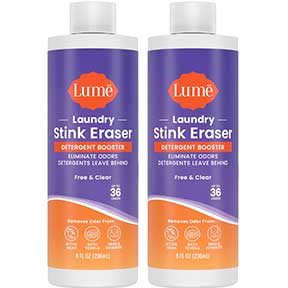
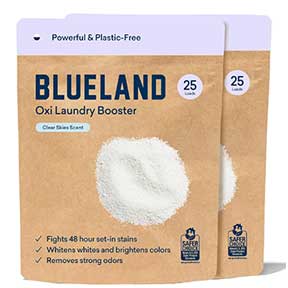
- Commercial laundry water softeners or detergent boosters
They aren’t all equally effective, and they don’t all work in exactly the same way.
Let’s take a look at each one.
Using Baking Soda in the Laundry
Baking soda is sodium bicarbonate. It is commonly used for cooking, but it has also been a popular household cleaning and laundry ingredient for generations.
Baking soda can help deodorize laundry and may help improve cleaning performance by increasing alkalinity and helping with some odors and residue.
It can also help slightly with water hardness, although it is not a substitute for a true water softener, especially when dealing with very hard water.
One reason I like baking soda is that it is a relatively mild household product. If I’m choosing between a mild laundry booster and a stronger alkaline product for an ordinary load, I’m usually going to start with the milder option.
How to Use Baking Soda in the Laundry
For a typical load, add about 1/2 cup of baking soda to the wash along with your regular laundry detergent.
You can adjust the amount depending on the size of the load and how much odor or buildup you’re dealing with.
Baking soda can help:
- Deodorize laundry
- Freshen fabrics
- Improve cleaning performance
- Help remove some odors
- Reduce some residue
Baking soda is useful, but don’t expect it to completely solve a severe hard-water problem. If your water is extremely hard, you may need a more effective water-softening method.
Using Washing Soda to Soften Water
Washing soda, also called sodium carbonate or soda ash, is different from baking soda.
Washing soda is much more alkaline than baking soda and is commonly used as a laundry booster and water-softening ingredient.
It helps laundry detergent work more effectively by binding with or controlling calcium and magnesium ions in hard water.
Because washing soda is strongly alkaline, it can be irritating to your skin and eyes. I recommend wearing gloves when handling it, especially if you are using it frequently or working with the dry powder.
And don’t confuse washing soda with baking soda. They are different products and should not be used interchangeably.
How to Use Washing Soda in the Laundry
For a typical load, add about 1/2 cup of washing soda along with your regular laundry detergent.
If you’re using powdered washing soda, adding it while the washer is filling can help it dissolve before the clothes are added.
If your washing machine uses a detergent dispenser, use the appropriate compartment if the dispenser instructions allow powdered boosters.
Washing soda can help:
- Improve detergent performance
- Control hard-water minerals
- Remove greasy or oily soils
- Reduce some residue
- Deodorize laundry
- Brighten dingy laundry
Washing soda is a stronger alkaline product than baking soda, so there is no reason to use more than necessary.
Using Borax as a Laundry Booster
Borax is a naturally occurring mineral compound containing sodium, boron, oxygen, and water. It has been used as a laundry booster for many years.
Borax is alkaline and can help improve cleaning performance, particularly when laundry contains greasy or oily soils. It can also help with odors and provides some water-softening action.
However, I wouldn’t describe borax as a replacement for a whole-house water softener. Its effect on hard water is more limited than that of a dedicated water-softening system.
Borax is also not the same thing as oxygen bleach. It does not simply turn into oxygen bleach in your washing machine.
How to Use Borax in the Laundry
For a typical load, add about 1/2 cup of borax along with your regular detergent.
Borax can help:
- Improve detergent performance
- Control some effects of hard water
- Remove some odors
- Improve cleaning of greasy or oily soils
- Help with some stains
Follow the directions on the product you are using, particularly when washing delicate fabrics or clothing with special care requirements.
Which Laundry Booster Is Best?
There isn’t one laundry booster that is best for every situation.
Baking soda is a good choice when you mainly want to freshen and deodorize laundry and provide a mild boost to your detergent.
Washing soda is a stronger alkaline booster and can be useful when you’re dealing with hard water, greasy soils, or dingy laundry.
Borax can help boost detergent performance and control some of the effects of hard water while also helping with odors and certain types of stains.
If your primary problem is very hard water, a true water-softening system will be much more effective than relying on a laundry booster alone.
Do Laundry Detergents Already Contain Water Softeners?
Many modern laundry detergents contain ingredients called builders that help control the effects of hard water.
This is one reason you may not notice a problem with hard water when using one detergent but see a difference when using another.
If your detergent already performs well in your water, you may not need to add a booster to every load.
If you’re dealing with very hard water, however, adding an appropriate laundry booster may improve cleaning performance.
How Do I Know If Hard Water Is Affecting My Laundry?
You may notice several signs:
- Clothes look dull even after washing.
- White clothing becomes gray or dingy.
- Towels feel stiff or rough.
- Laundry doesn’t seem as clean as it should.
- Detergent seems to leave residue.
- You notice mineral deposits around the washing machine.
- Your laundry seems to require more detergent to get clean.
- Fabrics develop a chalky or powdery residue.
These symptoms can have other causes, too. Using too much detergent, overloading the washing machine, or not using the correct wash cycle can also leave clothes looking or feeling less than clean.
Do You Need a Whole-House Water Softener?
If your home has very hard water, a whole-house water softener can provide a much more complete solution.
A laundry booster only treats the water used for a particular wash. A water softener treats the home’s water supply and can reduce the effects of hard water throughout the house.
A whole-house water softener can help reduce mineral buildup in:
- Washing machines
- Dishwashers
- Water heaters
- Faucets
- Showerheads
- Plumbing
- Other water-using appliances
However, installing a water softener isn’t always necessary just because you have moderately hard water.
For many households, using a suitable detergent and an occasional laundry booster is enough to improve laundry results.
A Few Things to Remember About Laundry Boosters
Laundry boosters can help, but they aren’t magic.
If your clothes are coming out dirty, don’t immediately assume hard water is the problem.
Make sure you’re also:
- Using the correct amount of detergent.
- Not overloading the washing machine.
- Choosing the right wash cycle.
- Pretreating difficult stains.
- Washing clothes at an appropriate temperature.
- Cleaning your washing machine regularly.
- Allowing enough water for the load to rinse properly.
Using too much detergent can actually create its own problems by leaving residue behind.
And adding several laundry boosters to the same load isn’t necessarily better. More cleaning products do not automatically equal cleaner clothes.
Which Laundry Booster Should You Try?
If you’re dealing with hard water and want to experiment with a laundry booster, start with one product at a time so you can tell whether it actually makes a difference.
For mild odor or freshness problems, baking soda is a simple place to start.
For very hard water, dingy laundry, or greasy soils, washing soda may provide a stronger boost.
Borax is another option when you want to improve detergent performance and help with odors and certain types of stains.
If none of these makes much difference, your water may simply be too hard for a laundry booster to overcome. In that case, testing your water and considering a water-softening system may be worthwhile.
The Bottom Line on Laundry Boosters and Water Softeners
Hard water can make laundry more difficult because calcium and magnesium can interfere with detergent performance and contribute to mineral buildup.
Laundry boosters such as baking soda, washing soda, and borax can help improve laundry results, but they don’t all work the same way.
Baking soda is a mild option that can help freshen and deodorize laundry. Washing soda is a stronger alkaline laundry booster that can help control hard-water minerals and improve cleaning. Borax can also boost detergent performance, help with odors, and provide some water-softening action.
If you have extremely hard water, however, a laundry booster isn’t a replacement for a whole-house water softener.
The trick is to figure out what your laundry actually needs. Sometimes a simple booster is enough to make a noticeable difference. Other times, the real solution is changing your detergent, using less detergent, improving your washing routine, or addressing the hard water itself.
And remember, when it comes to laundry, more isn’t always better. Start with one booster, use a reasonable amount, and see how your clothes respond.
Related Articles:
Laundry 101: Part 5, How to Use Laundry Detergent
Clothing and Laundry


Follow Us on Facebook