How to Get the Smell Out of a Wool Rug

How to Remove Smells from Wool Rugs
There are many benefits to owning a wool rug. Wool is durable, resilient and a renewable natural fiber. There are also many beautiful styles and designs to choose from, so if you’re considering a wool rug – or already have one – you’ll want to know how to get the smell out of a wool rug when an odor develops.
When I was growing up, my parents had a couple of large wool area rugs in our household. I remember playing with my plastic horses on those rugs. Oh boy, that was a long time ago!
One of the problems with a wool rug is that it can sometimes develop a strong odor. Even a brand-new wool rug can have a noticeable smell when it is first unrolled and placed in your home.
A mild wool smell can be normal, especially with a new rug. Wool has its own natural odor, and some new rugs may also have odors from dyes, backing materials, adhesives or manufacturing processes.
However, a strong chemical smell, persistent musty odor, or foul smell that doesn’t improve with airing deserves more attention.
Why Do Wool Rugs Smell?
There are several reasons a wool rug can develop an unpleasant smell.
New Rug Odors
A new wool rug may have a natural wool odor or smell from dyes, adhesives, latex backing, or other materials used during manufacturing.
If a new rug has an unusually strong or unpleasant chemical odor that doesn’t improve after airing it out, contact the retailer or manufacturer. Depending on the rug and its construction, replacement may be more appropriate than trying to cover the smell with household cleaners.
Moisture
Moisture is one of the biggest causes of musty smelling rugs.
A spill, leak, pet accident or damp floor underneath the rug can leave moisture trapped in the fibers or backing.
Wool can hold moisture, and a damp rug that doesn’t dry properly can develop a musty odor.
Pet Accidents
Pet urine and other accidents can create strong odors that are difficult to remove, especially when liquid has reached the rug backing or padding.
A surface treatment may make the rug smell better temporarily without completely removing the source of the odor.
Food and Other Spills
Food, beverages, dirt, body oils and other substances can become trapped in a rug and eventually produce odors.
Dirty Rug or Underlying Floor
Sometimes the smell isn’t actually coming from the wool fibers.
The rug pad, floor underneath the rug, or dirt trapped in the rug can also be responsible for an odor.
Before treating the rug, determine where the smell is coming from.
First: Find the Source of the Odor
Before reaching for a deodorizer, inspect the rug carefully.
Ask yourself:
- Is the odor strongest on the surface or underneath the rug?
- Is there a rug pad underneath it?
- Has the rug ever been wet?
- Has a pet had an accident on it?
- Is there visible staining?
- Does the smell get stronger when the weather is humid?
- Is the odor coming from the backing rather than the wool?
If the odor is coming from a wet backing, rug pad, pet urine, mold or mildew, simply sprinkling something on the surface probably won’t solve the problem.
How to Get the Smell Out of a Wool Rug
The safest approach is usually to start with dry cleaning methods and good ventilation rather than soaking the wool.
1. Vacuum the Rug Thoroughly
Start with a good vacuuming.
Vacuum both sides if the rug’s construction allows it and you’re able to do so safely. Pay attention to the edges and areas underneath furniture where dirt can accumulate.
Use an appropriate vacuum setting for the rug. Avoid aggressive vacuuming that could pull at loose fibers, fringe or delicate construction.
Vacuuming won’t necessarily remove a strong odor by itself, but it removes dirt and debris that can contribute to the smell.
2. Air Out the Wool Rug
Fresh air can help reduce some odors, especially odors from a new rug.
If practical, move the rug to a dry, well ventilated area.
Outdoor airing can also help, but avoid leaving a valuable wool rug in strong direct sunlight for long periods. UV exposure can fade dyes, particularly on colorful or antique rugs.
If you put the rug outside:
- Choose a dry day with low humidity.
- Keep it clean and protected from dirt.
- Avoid prolonged direct sunlight.
- Don’t leave it outside overnight.
- Bring it inside before humidity or dew becomes a problem.
The goal is air circulation, not baking the rug in the sun.
3. Check the Rug Pad and Floor
If the rug still smells after airing, lift it and inspect the underside.
Don’t forget to check the rug pad and floor underneath.
A rug pad can absorb moisture, pet accidents and odors. If the pad smells strongly, cleaning the wool rug won’t solve the problem by itself.
Clean and dry the floor underneath before putting the rug back in place.
4. Use Activated Charcoal Nearby
Activated charcoal can help adsorb odors in an enclosed area.
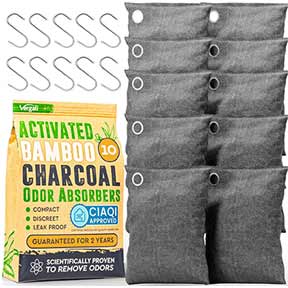
Instead of putting charcoal directly on or inside the rug, use activated charcoal odor absorbers in containers or breathable odor absorbing bags placed near the rug.
For example:
- Place the rug in a clean, dry room with good air circulation.
- Put activated charcoal odor absorbers nearby.
- Close the room or otherwise limit unnecessary traffic if practical.
- Leave the charcoal in place according to the product directions.
- Continue airing the rug.
This is a slower approach, but it avoids putting charcoal dust directly into the wool.
Don’t use charcoal briquettes directly on the rug.
5. Be Careful With Baking Soda
Baking soda is often recommended as a carpet deodorizer, but wool rugs deserve more caution.
A large amount of powder can work down into the pile and be difficult to remove completely, especially from a thick or hand-knotted rug.
If you decide to use a wool safe powdered product, follow the product directions and test it on a small inconspicuous area first.
For an expensive, antique, Oriental, hand-knotted or otherwise valuable wool rug, I would skip homemade powder treatments and ask a professional rug cleaner for advice.
How to Remove a Musty Smell from a Wool Rug
A musty odor usually means you need to look for a moisture source.
Check:
- The rug itself
- The rug pad
- The floor underneath
- Nearby windows or doors
- Plumbing or appliance leaks
- Areas where condensation may occur
If the rug has been wet, dry it as quickly as possible with good air circulation.
Do not simply cover a musty smell with a deodorizer. If moisture remains, the odor will likely return.
If you see visible mold or mildew, or the rug has remained wet for an extended period, professional evaluation is the safest approach.
How to Remove Pet Odor from a Wool Rug
Pet urine is one of the more difficult odors to remove from a wool rug.
The first thing to determine is whether the urine reached the rug backing or pad.
For a washable synthetic carpet, there may be several do-it-yourself options. A valuable wool rug is different.
Avoid saturating a wool rug with vinegar, peroxide, enzyme cleaners, ammonia or other homemade solutions unless the product is specifically intended for that type of wool rug and its construction.
For an expensive or valuable rug, professional rug cleaning is the better choice.
What Not to Use on a Wool Rug
Wool is durable, but that doesn’t mean every carpet-cleaning trick is appropriate for it.
Avoid:
- Soaking the rug unless the rug manufacturer or a qualified rug professional says it is appropriate.
- Using large amounts of baking soda, borax or other powders that can become trapped in the pile.
- Using chlorine bleach.
- Using strong household cleaners not designed for wool.
- Using ammonia unless specifically recommended for the particular rug.
- Using a steam cleaner without knowing whether the rug’s construction can tolerate it.
- Scrubbing aggressively.
- Leaving the rug damp.
- Leaving a valuable rug in direct sunlight for extended periods.
- Putting cat litter or charcoal briquettes directly on the rug.
Wool rugs can have different dyes, backings, adhesives and construction methods, so a treatment that works on one rug may damage another.
When You Should Call a Professional Rug Cleaner
There are times when a DIY deodorizing method just isn’t the right answer.
Consider professional cleaning if:
- The rug is expensive or antique.
- It is an Oriental or hand-knotted rug.
- It is hand-tufted or has a delicate backing.
- The rug has been soaked.
- There is a strong pet urine odor.
- The rug has a persistent musty smell.
- You see mold or mildew.
- The backing or adhesive appears to be deteriorating.
- The odor doesn’t improve after airing and vacuuming.
- You’re not sure what the rug is made from.
A professional rug cleaner can evaluate the fiber, dyes, backing and construction before deciding how the rug should be cleaned.
How to Prevent Odors in a Wool Rug
Once you’ve gotten rid of the smell, a little prevention can go a long way.
Vacuum Regularly
Regular vacuuming removes dirt, dust and debris before they become embedded in the rug.
Deal With Spills Quickly
Blot spills as soon as possible rather than allowing moisture to sit in the wool.
Avoid rubbing the spill aggressively, which can damage fibers and spread the stain.
Keep the Rug Dry
Don’t leave a wet wool rug sitting on the floor.
If the rug becomes wet, concentrate on drying it promptly with good air circulation.
Clean the Rug When Necessary
A wool rug doesn’t necessarily need frequent deep cleaning, but it does need appropriate care.
Follow the manufacturer’s care recommendations or have the rug professionally cleaned when needed.
Don’t Forget the Rug Pad
The rug pad should also be inspected and replaced or cleaned when necessary. A dirty or damp pad can contribute to odors even when the rug itself is clean.
How to Get the Smell Out of a Wool Rug: Quick Guide
If you’re looking for the short version, here’s where I’d start:
New wool smell: Air the rug in a dry, well-ventilated area and allow the odor time to dissipate.
Dusty or stale smell: Vacuum thoroughly and air the rug.
Musty smell: Find and eliminate the moisture source and dry the rug and surrounding area thoroughly.
Pet urine smell: Determine whether the urine reached the backing or rug pad. For valuable wool rugs, professional cleaning is recommended.
Chemical or adhesive smell: Contact the retailer or manufacturer if the odor is unusually strong or persistent.
Persistent odor: Have the rug professionally evaluated rather than repeatedly applying household deodorizers.
How to Get the Smell Out of a Wool Rug
Getting a bad smell out of a wool rug isn’t always as simple as sprinkling something on it and waiting.
Start by finding the source of the odor. Vacuum the rug, allow it to air in a dry, well-ventilated area, and inspect the rug pad and floor underneath. If moisture, pet urine, mold, mildew or a deteriorating backing is responsible, the underlying problem needs to be addressed.
Wool rugs can be beautiful and long-lasting, but they’re worth treating carefully. The gentlest effective method is usually the best place to start, and valuable or delicate rugs are often better left to a professional rug cleaner.
With a little care, your wool rug can smell fresh again without risking damage to the fibers, dyes or backing.
Related Articles
Area Rugs


Household Cleaners


Follow Us on Facebook